
Signs of Hard Water and How a Water Softener Can Help
CALL NOW (970) 818-1613We pick up the phone, 24/7
CALL NOW (970) 818-1613Does Northern Colorado Have Hard Water?
Yes. Northern Colorado’s water supply consistently tests at moderately hard to very hard levels, typically between 120 and 250+ parts per million (PPM) of dissolved minerals. Fort Collins, Loveland, Greeley, and surrounding cities all deal with elevated levels of calcium and magnesium in their municipal water.
Hard water isn’t a health hazard, but it creates real problems for your plumbing, appliances, and daily comfort over time.
Signs Your Home Has Hard Water

White Buildup on Fixtures
That chalky white or yellowish crust on your faucets, showerheads, and around drain openings is mineral scale. It’s the most visible sign of hard water.
Soap Scum That Won’t Quit
Hard water reacts with soap to form a sticky residue. If your shower doors, bathtub, and sinks are constantly coated in a film no matter how often you clean, hard water is the cause.
Dry Skin and Dull Hair
Hard water makes it difficult to rinse soap and shampoo completely. The mineral residue left on skin and hair causes dryness, irritation, and a dull appearance.
Spots on Dishes and Glassware
If your dishes come out of the dishwasher with white spots or a cloudy film, hard water minerals are leaving deposits as the water dries.
Reduced Water Flow
Over years, mineral scale builds up inside your pipes, gradually narrowing them and reducing water pressure. This is especially common in older homes with galvanized steel pipes.
Appliance Problems
Hard water shortens the lifespan of water heaters, dishwashers, and washing machines. Scale buildup on heating elements forces these appliances to work harder and consume more energy.
How Hard Water Damages Your Plumbing
The real cost of hard water is hidden inside your walls and under your floors:
- Water heater efficiency drops: Just 1/4 inch of scale on a water heater element can increase energy consumption by 40%
- Pipe diameter shrinks: Scale narrows pipes over time, reducing flow and increasing pressure on fittings
- Fixture damage: Faucets, valves, and connectors corrode and fail faster
- Appliance lifespan decreases: Water heaters, dishwashers, and ice makers fail years earlier than they should
How a Water Softener Helps
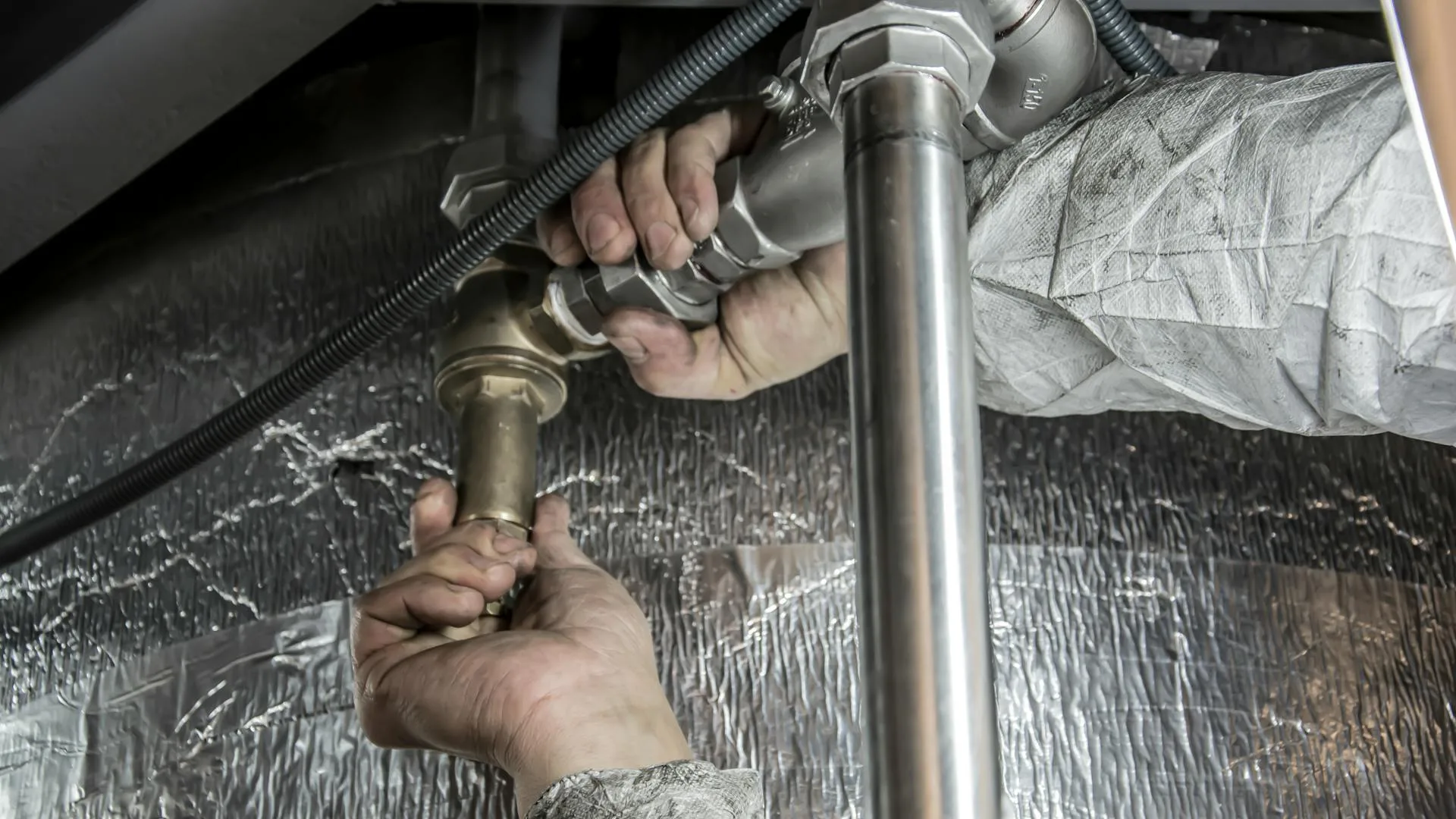
A water softener removes calcium and magnesium through an ion exchange process, replacing hard minerals with sodium or potassium ions. The result:
- No more scale buildup on fixtures and inside pipes
- Longer appliance lifespan
- Better water heater efficiency
- Cleaner dishes, softer skin, and shinier hair
- Less soap and detergent needed (soft water lathers better)
- Lower energy bills from more efficient water heating
Water Softener Options
- Salt-based water softeners: The most effective option. Uses salt pellets that need refilling every few weeks.
- Salt-free water conditioners: Don’t remove minerals but prevent them from forming scale. Less effective but maintenance-free.
- Whole-house water filtration with softening: Combines softening with filtration for improved water quality and taste.
Get a Water Treatment Assessment
JT Plumbing Heating & Air installs and services water softeners and filtration systems throughout Northern Colorado. We serve Fort Collins, Loveland, Windsor, Greeley, Wellington, Berthoud, Longmont, Johnstown, Mead, Evans, and Eaton.
Call us at (970) 818-1613 to schedule a water quality assessment for your home.
Serving Northern Colorado
 All Service Areas


Serving our Community
At JT Plumbing Heating & Air, we feel it’s important to support our Northern Colorado community and the causes that are close to our family. Every year we support local charities, nonprofits, and sponsor community activities that are important to us. Learn more about the causes we support and how you can help.
COMMUNITY INVOLVEMENT